


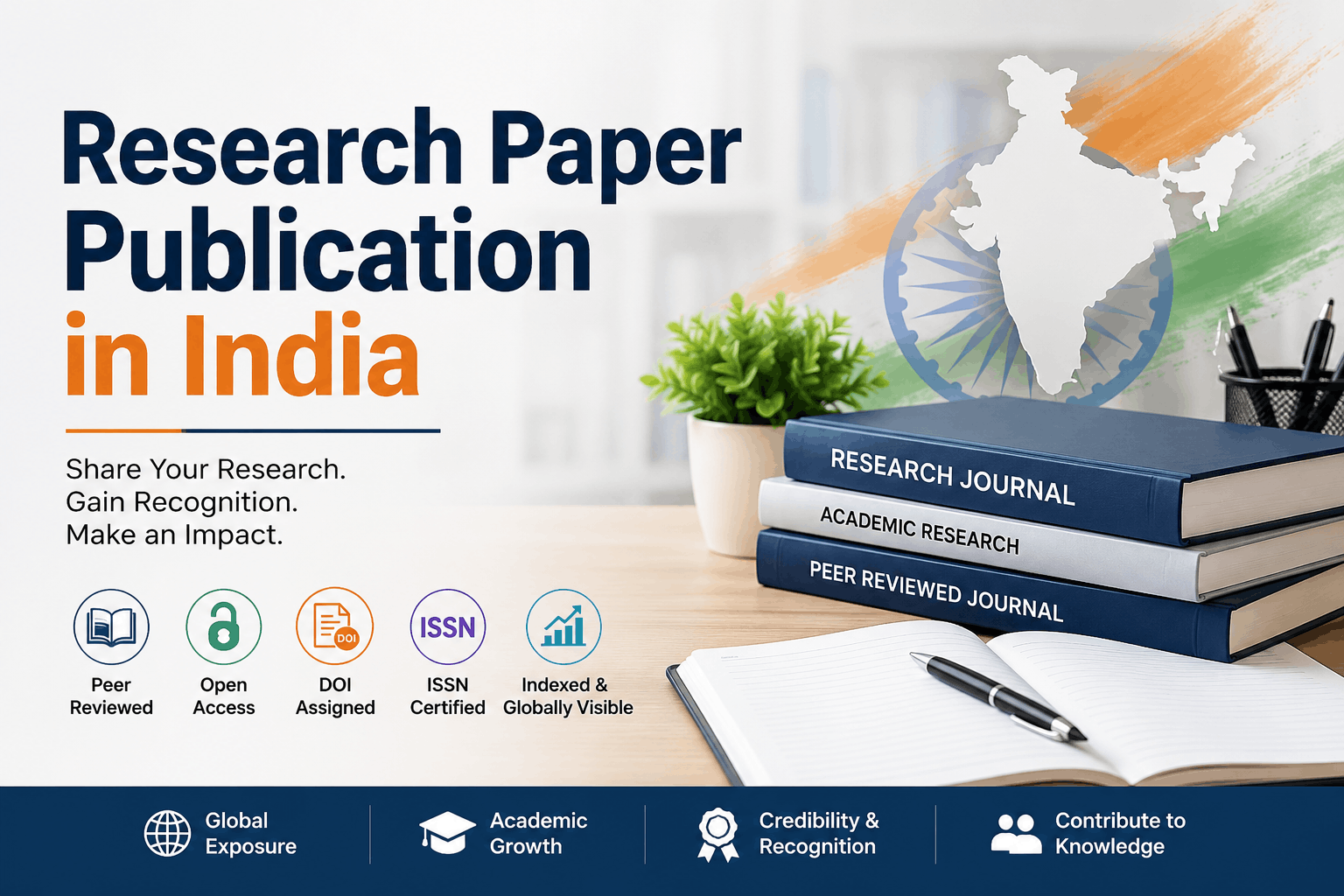
Research Paper Publication in India | Complete Guide for Scholars and Researchers
Introduction
Research becomes meaningful when it is shared with the academic community and the world. In today’s competitive academic environment, research paper publication in India has become essential for scholars who want to build credibility, improve career opportunities, and expand their academic visibility.
Whether the field is linguistics, education, psychology, management, data science, law, arts, or information technology, publishing in an international double-blind peer-reviewed journal ensures that research reaches the right audience and gains professional recognition.
Why Research Paper Publication Matters
Publishing research is more than adding a line to a CV. It offers several long-term academic and professional benefits:
- Enhances academic and professional profile
- Supports promotions and career growth
- Contributes to the field of study
- Builds credibility and global visibility
- Helps fulfill UGC and institutional requirements
Choosing the right publication platform is critical for ensuring the quality and impact of research work.
Key Features of a Good Journal
Selecting the right journal is one of the most important decisions in the publishing process. A reliable journal should include the following features:
1. Double-Blind Peer Review
A double-blind peer review system maintains fairness and academic quality by keeping both authors and reviewers anonymous. This process improves transparency and research credibility.
2. Open Access Publishing
Open access journals allow research to be freely available worldwide, increasing readership, visibility, citations, and impact.
3. DOI (Digital Object Identifier)
A DOI provides a permanent digital identity for research articles, making them easy to access and cite globally.
4. ISSN Certification
ISSN certification confirms that the journal is officially registered and recognized as a serial publication.
5. Indexing and Visibility
Indexed journals help research appear in major academic databases where scholars actively search for relevant studies.
Disciplines Covered in Modern Research Journals
Modern journals support multidisciplinary and interdisciplinary research across various academic domains, including:
- Linguistics
- Education
- Psychology
- Data Science
- Physical Education
- Arts
- Management
- Information Technology
- Malayalam Studies
- Judicial Science
- History and Archaeology
- Teacher Education
- English
- Commerce
- Economics
- Social Science
- Administration and Management
- Arts and Liberal Studies
- Jurisprudence
- Technical Research
- Vedic Science
- Pure Science
- Computer Science
- Gender Research Studies
- Sanskrit
- Hindi
- Dental Science
This flexibility allows researchers to publish diverse and innovative work in suitable academic platforms.
Publication Frequency and Flexibility
Many journals today provide flexible publication schedules to help researchers meet academic deadlines efficiently. Common publication cycles include:
- Monthly publications
- Quarterly publications
- Fast-track publication options
Flexible publishing systems help researchers publish quality work without unnecessary delays.
Benefits of Publishing in International Journals
Publishing in international journals provides several advantages:
- Global exposure for research work
- Recognition among international scholars
- Better citation opportunities
- Strong academic networking opportunities
Researchers may also receive e-certificates that add value to academic portfolios and professional profiles.
Common Mistakes to Avoid
Many researchers face rejection because of avoidable mistakes. Common issues include:
- Choosing low-quality or predatory journals
- Ignoring peer review standards
- Not checking DOI or ISSN availability
- Improper formatting and submission guidelines
- Missing indexing verification
A structured publishing approach helps avoid these problems and improves acceptance opportunities.
How to Get Started with Research Publication
Researchers can follow these steps for a smooth publication process:
- Prepare the manuscript properly
- Select a trusted peer-reviewed journal
- Verify DOI, ISSN, and indexing credentials
- Submit the research paper
- Complete the review and revision process
- Publish and share the work globally
Following these steps helps ensure quality publication and professional credibility.
Conclusion
The demand for quality research paper publication is increasing rapidly across academic fields. Researchers today require journals that provide credibility, visibility, and academic impact.
Choosing the right journal ensures that research work reaches global audiences, receives proper recognition, and contributes meaningfully to knowledge development. Great research should not remain unpublished.
Submit your research paper to a trusted international double-blind peer-reviewed journal with open access, DOI, ISSN, and indexing support.
Because impactful research deserves global visibility.
