


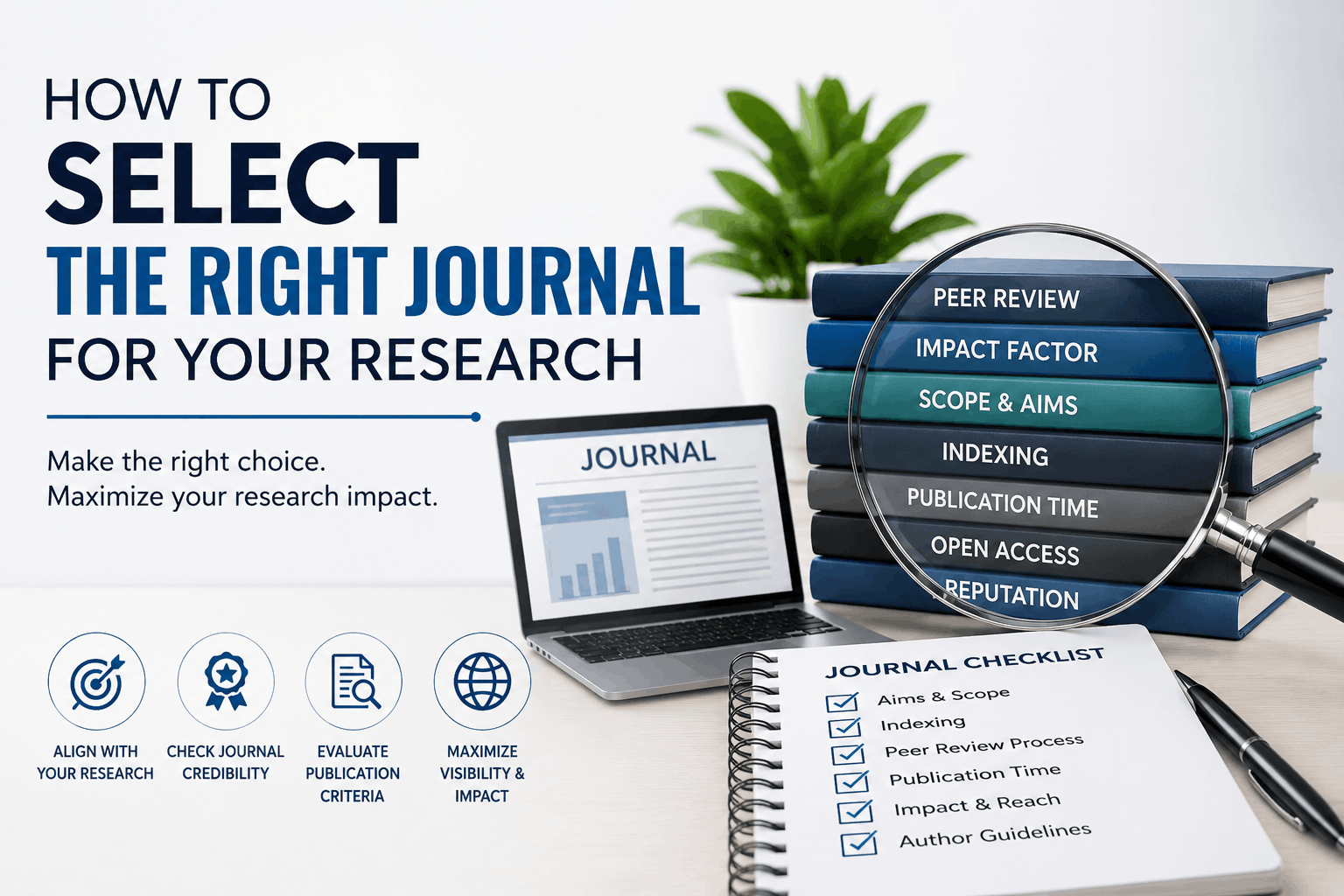
HOW TO SELECT THE RIGHT JOURNAL FOR YOUR RESEARCH
In our previous blog, "Fast Publication Journals: What Researchers Should Know", we discussed how speed and credibility must go hand in hand when choosing where to publish. But before deciding between fast or traditional outlets, every researcher faces a bigger question: which journal is right for your study? Knowing how to select the right journal for your research can determine your work's reach, impact, and acceptance. Here's a practical guide.
1. Understand Your Research Scope
Start by defining your research scope clearly. What is your study about, and who is most likely to benefit from it? Identifying your subject, methodology, and target audience helps narrow down journals that align with your paper's purpose.
2. Match the Journal's Scope to Your Topic
Every journal has a defined scope outlining the topics it publishes. Read the "Aims and Scope" section carefully and compare it with your research focus. Submitting to a journal whose scope doesn't match your work is one of the most common reasons for desk rejection.
3. Check the Impact Factor and Indexing
A journal's impact factor reflects its citation influence in the academic community. While high-impact journals carry prestige, they're often highly competitive. Equally important is indexing—prioritize journals listed in databases like Scopus, Web of Science, PubMed, or DOAJ to ensure visibility and credibility.
4. Identify the Target Audience
Consider who reads the journal. Is it aimed at academic researchers, practitioners, policymakers, or interdisciplinary readers? A well-matched audience increases the chances your work will be read, cited, and applied—amplifying your study's real-world impact.
5. Review Acceptance Rate and Timeline
Each journal has its own acceptance rate and publication timeline. High-tier journals often have low acceptance rates and longer review periods. Mid-tier and emerging journals usually offer faster turnaround. Choose based on your priorities—prestige, speed, or balance.
6. Consider Open Access vs Subscription
Decide whether you prefer an open-access journal or a traditional subscription-based one. Open access increases visibility and citations but typically involves an Article Processing Charge (APC). Subscription journals are free to publish in but limit reader access. Choose what aligns with your goals.
7. Verify the Journal's Reputation
Always verify the journal's credibility before submitting. Check its editorial board, ISSN, peer review process, and publication history. Avoid predatory journals that promise quick publication for high fees while skipping proper review.
8. Read the Author Guidelines Thoroughly
Every journal has unique author guidelines covering formatting, citation style, word limits, and submission rules. Following them precisely shows professionalism and improves your manuscript's chances of progressing through editorial screening without unnecessary delays.
9. Study Recently Published Articles
Browse the journal's recent publications to understand its style, structure, and topic preferences. If your research aligns well with what's been recently published, it signals that your paper fits the journal's ongoing direction—boosting your acceptance odds.
10. Use Journal Finder Tools and Mentor Input
Use online tools like Elsevier Journal Finder, Springer Journal Suggester, or Wiley Journal Finder to match your manuscript to suitable journals. Combine this with feedback from mentors, supervisors, or experienced colleagues for an informed final decision.
Final Thoughts
Learning how to select the right journal for your research is a critical step that shapes the trajectory of your academic work. The ideal journal balances scope, audience, credibility, and reach—ensuring your study finds the right readers.
Ready to publish your research in an International Peer-Reviewed Journal?
Submit your manuscript today and gain global academic visibility
